

Vehicle Fires Among Deadly Risks in Defective Cars
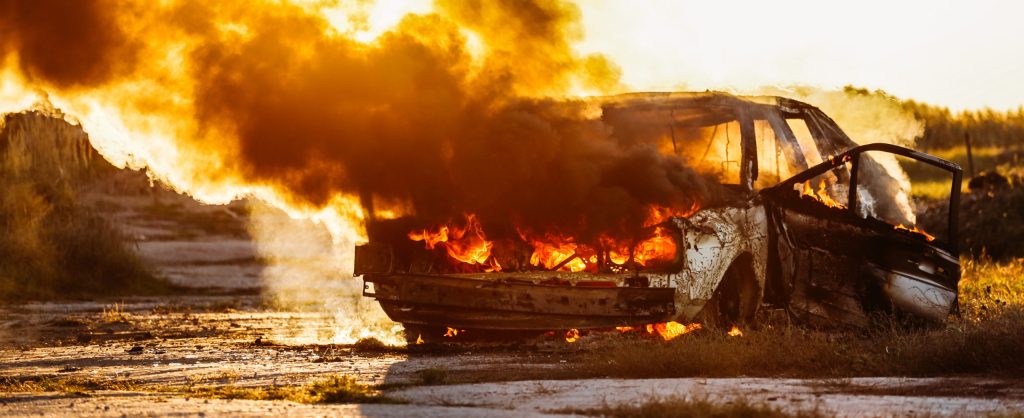
A recent vehicle fire in the Carmel Mountain Ranch neighborhood of San Diego demonstrates just how dangerous these fires can be.
Fox 5/KUSI caught video footage of the fire, which occurred around 8:15 am on April 19, 2024. at Ted Williams Parkway and Shoal Creek Road, just each of I-15. Firefighters fought to control the blaze, which kept flaring up despite repeated fire suppression efforts.
“They put it out, and it just comes right back,” noted the Fox 5 news reporter capturing live coverage of the scene. Smoke filled the air at the nearby intersection, and a fire truck partially blocked one lane, causing traffic to proceed cautiously through the area.
Vehicle Fire Risks
About 13 percent of all fires in the US each year are vehicle fires, according to the Federal Emergency Management Administration (FEMA). This number does not include the fire department responses to accident sites that don’t involve a vehicle fire.
About 171,500 highway vehicle fires occur in the US each year. These fires claim approximately 345 lives annually, causing 1,300 injuries and $1.1 billion in property loss. These numbers include fires in passenger vehicles, freight vehicles, and agricultural and construction vehicles.
Vehicle fires are deadlier, on average than other types of fires. The average number of highway vehicle fire deaths is 2.9 deaths per 1,000 fires – lower than the average for all fires, which is 2.2 deaths per 1,000 fires.
Passenger vehicles are more likely to be involved in fires than other types of vehicles. Passenger vehicles account for about 83 percent of all highway vehicle fires. Among passenger vehicles, buses have the lowest fire rate, accounting for about 0.6 percent of all vehicle fires. Transport vehicles like semi trucks accounted for about 9 percent of all vehicle fires, while industrial, construction, and agricultural vehicles like cement trucks and farm equipment accounted for only 0.8 percent of all vehicle fires.
Vehicle Defects and Vehicle Fires
FEMA’s data shows that more than one-third of all vehicle fires have “unintentional” causes. They result from equipment failures, crashes, acts of nature, or unknown causes. Only about 5 percent of all vehicle fires are set intentionally. These numbers include the 23 percent of vehicle highway fires in which investigators could not determine the cause even after investigation.
93 percent of all vehicle fires start within the vehicle itself. Areas most likely to be the source of a vehicle fire include the following:
- Engines, running gear, and wheels (62 percent),
- Operator or passenger areas (12 percent),
- Cargo or trunk areas (4.6 percent),
- Exterior surfaces of the vehicle (3.4 percent), and
- Fuel tanks and fuel lines (1.6 percent).
Also, there are new risks of fires from defective battery packs in electric vehicles (EVs). With the rise of EV purchases, it’s critical that consumers are aware of the potential dangers these vehicles pose. Some known recalls on EVs include the Chevy Bolt, Nissan, and Tesla. Read our in-depth blog on car fires here.
The heat from powered equipment, such as a vehicle’s engine or electrical system, started the fire in 63 percent of cases. Hot or smoldering objects, ranging from debris outside the vehicle to overheated electrical or mechanical elements within the vehicle, started 12.5 percent of fires.
Vehicle defects play a significant role in vehicle fires. In the FEMA data, “mechanical failure or malfunction” accounted for 45 percent of all vehicle fires on US roads. Electrical failures or malfunctions were connected to 22 percent of all vehicle fires. Problems with vehicle operation or design, manufacturing, and installation errors accounted for 9.3 percent of roadway vehicle fires.
In the face of fire risk, many automakers have issued recalls in the past few years. Significant vehicle recalls for fire-related defects include:
- Kia and Hyundai. Kia and Hyundai issued recalls for more than 3.3 million vehicles in late 2023 due to the risk of fire. Until the vehicles could be repaired, the automakers instructed drivers to park away from structures and other objects in case the vehicle spontaneously caught fire.
- Ford. Ford recalled over 42,000 SUVs in May 2024 due to concerns that the vehicle’s fuel lines could leak, triggering an engine fire.
- Mercedes-Benz. Mercedes-Benz issued a recall of over 116,000 vehicles in the United States in March 2024. The recall focused on a loose ground cable connection under the front passenger seat, which could start an electrical fire inside the passenger area of the vehicle.
Other vehicle defects can also increase the risk of fire. An issue that affects steering, for instance, might increase the risk of a crash. During a crash, a fire might occur due to damage to the fuel system, electrical components, or other areas of the vehicle.
What to Do If You Suspect You Have a Defective Vehicle
If you suspect your vehicle is a lemon, talk to an experienced San Diego lemon law attorney today. An initial consultation with a firm like Wirtz Law APC is free without any obligation or commitment on your part. During this consultation, an attorney will evaluate your repair history, answer your questions, and help you understand your legal options.
The team at Wirtz Law APC can help you understand your options and protect your legal rights. Whether your vehicle is new or used, talk to an experienced lawyer. Contact us today to learn about your options. We serve surrounding areas such as Mira Mesa, Convoy, National City, Imperial Beach, Gaslamp, Hillcrest, and Chula Vista. We also have experience handling lemon law cases across the state, from Central California to Northern California.
SHARE
Lemon Law Categories
Over 98% Success Rate
In Lemon Law Claims
Business Law Categories

They were very professional when they took my case VS. FORD after not repairing the mechanical problems with Warranty I sincerely recommend them. THANK YOU.